 evergences®ENGAGEMENT BRIEF / 03
AI-NATIVE PRODUCT DEVELOPMENT
AI Product
Builds
Define the product. Build and validate it.
Turn a product opportunity into an AI-native experience. Connect discovery and strategy to a prototype, agreed implementation, evaluation and launch readiness.
- What it is
- AI-native product development from discovery and strategy through the agreed build and evaluation stage.
- Who it is for
- Founders and product teams building a product or capability around real user needs.
- Investment required
- Scope-based fees and timing agreed in a proposal. A product owner, representative users, approved data and system access, and participation in validation are needed.
- Transformation
- Move from a product opportunity to a tested prototype and agreed implementation, with evaluation criteria, documented limits and handover.
- Intended benefit
- A useful AI-native experience and evidence for the next release decision. Adoption and business impact must be validated in use.
THE BUYER'S QUESTION
How do we turn an AI idea into a product customers actually use?
Start with a customer problem and evidence of how people handle it today. Define the outcome the product should help them achieve, then test the smallest useful experience with representative users. Agree what must be true at each stage before moving from a prototype to a pilot or production release.
Earn the next release decision.
- Customer evidence
- Observe the work, current alternatives and reasons people choose them. Test the problem and the experience with representative users rather than treating enthusiasm for a demo as adoption.
- Prototype
- Use a bounded demonstration to test the experience and technical approach. Record assumptions, artificial data and manual steps so a convincing demo is not mistaken for a running product.
- Pilot
- Agree the users, permissions, baseline and acceptance criteria. Evaluate task completion, quality, review effort and exceptions in the intended workflow before expanding access.
- Production readiness
- Assign operating ownership and agree integration, monitoring, support and recovery requirements. Review limits and release criteria; broader rollout is a separate decision.
Measure whether people can finish the job.
Track completed customer tasks, repeat use, human review and the total cost of delivery. Compare the result with the current alternative. Use observed behavior and unresolved failures to decide whether to stop, revise or release the agreed next stage; adoption and financial returns must be measured in use.
SEAN'S PERSPECTIVE · 0:25
AI Can Speed the Product Workflow
Sean describes the progression from idea to design, engineering and a finished product. AI may accelerate the work; it does not remove the need to validate each stage.
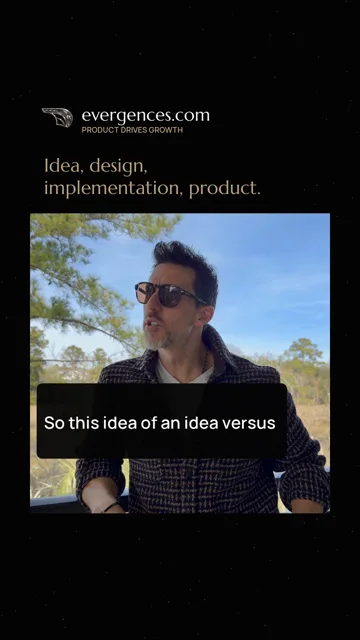
Exact transcript
So this idea of an idea versus a design versus an engineered implementation versus a final product. It's a stage or a workflow across pretty much any product or service that you develop. And you can't jump it. Even with AI, you can accelerate it, I suppose, but you can't skip it.
Video and transcript pageWHAT YOU RECEIVE
Three useful outputs.
Product strategy and build plan
User needs, product priorities, architecture, data access and evaluation criteria. An agreed implementation scope.
Prototype and implementation
A prototype to test the approach, followed by agreed product capabilities, model workflows, interfaces and integrations.
Evaluation and launch readiness
Tests against agreed criteria, documented limits, operating ownership, handover and stage-appropriate launch checks.
From discovery to release
- Discover. Understand users, the product opportunity and success measures.
- Prototype. Test the experience and AI approach.
- Build. Implement the agreed scope and integrations.
- Validate. Evaluate behavior, limits and launch readiness.
A prototype demonstrates an approach. Pilot and production requirements are agreed explicitly.
What you bring
- A product owner and representative users.
- Product goals, examples and baseline measures.
- Approved data and system access, with permission constraints and participation for validation.
Share only information you are authorized to provide.
Clear boundaries
Excludes unagreed features, integrations, ongoing support, penetration testing, security certification and legal or regulatory advice. No business result is promised.
Agree the stage. Define acceptance criteria, responsibilities, human review and operating requirements before implementation.
Start with three answers
- Which users and product problem should the build serve?
- Who owns the product and its operating decisions?
- What approved data, access and evaluation evidence are available?
RELATED EXPERIENCE
Enterprise knowledge assistance
Sean led product development for an enterprise knowledge-assistance product, connecting user needs to AI capabilities and a documented build. The public case is self-reported; broad rollout and measured business impact are not claimed.
Read the knowledge-assistance caseDiscuss the product first.
Review products and service engagements in the shop. Implementation follows the agreed scope. Scope, fees and timing agreed in a proposal.