Physical products · Manufacturing · Product launch
How do you take a physical product from idea to launch?
Connect the customer experience, supplier specification, complete unit cost and launch promise. Build the first version around something you can manufacture and deliver consistently.
Design the complete thing the customer receives
A physical product reaches the customer as a complete experience: the object, its packaging, instructions, delivery and support. Decisions about any one of those pieces affect the others.
Begin with the use. Define where the product belongs, how it should feel and what someone needs to understand on first contact. Choose the few characteristics that make that experience distinctive. Every additional variation creates more decisions for suppliers, inventory and customer support.
Jetpack Glasses brought adaptive red lenses, an acetate frame and a custom engraved protective case into one offering. The work connected invention with optical-manufacturer collaboration, sample-lens testing and a limited first-edition announcement.
Make the supplier brief concrete
Translate the experience into a specification that a supplier can quote and reproduce. Include dimensions, materials, finish, packaging and the checks required before a batch is accepted. Keep the approved sample and specification aligned as changes are made.
For example, a protective case affects the product’s perceived quality, packed dimensions and shipping cost. Decide those details before treating a unit-cost quote as the full cost of the offering.
Compare suppliers against the same specification. Ask about order quantities, lead times, changes between samples and production, replacement handling and which decisions remain open. A lower quoted price can come with a larger inventory commitment or less flexibility.
Connect launch promises to delivery
Build the commercial plan around the complete delivered unit. Include the product, packaging, freight, fulfillment and an allowance for returns and support. Make sure the price and order size support the way you intend to sell.
Before launch, settle what is available, what the customer receives and when it can be delivered. Keep product descriptions tied to the version being offered.
A limited first edition can focus the initial scope and expose practical issues before a larger commitment. Use what it teaches you to improve the next order: simplify a component, refine instructions, change packaging or adjust the supplier brief. Each improvement should make the experience easier to reproduce.
Sean’s perspective
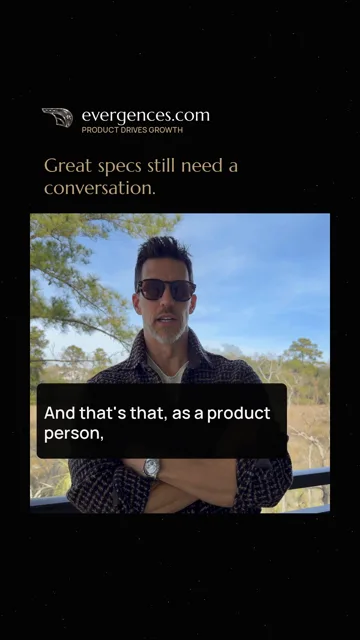
SEAN'S PERSPECTIVE · 0:55
A Product Spec Starts the Conversation
Sean describes the specifications, drawings and requirements that begin a conversation with a manufacturer or delivery team. The article develops the checks and commercial details needed to reach launch.
Exact transcript
And that's that, as a product person, I can deliver a tech pack, a spec, a list of requirements, user goals, I could deliver mockups, I could deliver wire frames, I could deliver a blueprint. I could deliver some type of written, drawn, 3D video, Explanation. to the folks who are going to build it, whether that's myself, if I'm designing for myself, and then I have to go build it, or to another team member or perhaps another supplier, contractor, manufacturer, et cetera. What inevitably happens is there's A lot of conversation back and forth and a debate and compromise.
Video and transcript page