 evergences®ENGAGEMENT BRIEF / 01
LEGACY & AI-NATIVE BUSINESSES
Autonomous
Enterprise
Assess the business. Build what comes next.
Transform your legacy or AI-native business into an adaptable enterprise built for defensible, profitable growth. Assessment and implementation are one scoped engagement.
- What it is
- One engagement to assess your business and implement agreed AI capabilities.
- Who it is for
- Founders and enterprise leaders adapting a legacy or AI-native business.
- Investment required
- Scope-based fees and timing agreed in a proposal. An accountable sponsor, representative users and approved access are needed for assessment, validation and handover.
- Transformation
- Move from disconnected workflows and unclear priorities to an agreed operating plan, implemented capabilities and accountable ownership.
- Intended benefit
- Better-supported decisions and more useful workflows, with a foundation for defensible, profitable growth. Commercial improvement must be measured.
THE BUYER'S QUESTION
Which AI workflow should we fund first?
Start with the customer or business outcome you need to improve. Find the repeated work that stands in the way, then test whether AI can change the economics. Prioritize a workflow with a clear owner, usable evidence, measurable value and a manageable cost of failure.
Make the workflow worth building.
- Value
- Name the revenue, margin, quality or operating constraint you want to improve. Decide what a completed outcome looks like.
- Evidence
- Establish a baseline and gather representative examples. Include exceptions, not just the easiest demonstrations.
- Execution
- Map the data, permissions, integrations and human decisions needed to finish the work. Assign an operating owner.
- Economics
- Count implementation, model usage, review, exceptions and maintenance. A faster model response is only one part of the cost.
Compare the pilot with the process it replaces.
Measure completed outcomes and total cost, including review and rework. Compare the pilot with the existing process before expanding. Use the result to decide what to improve, what to stop and what is ready for a wider rollout.
SEAN'S PERSPECTIVE · 0:19
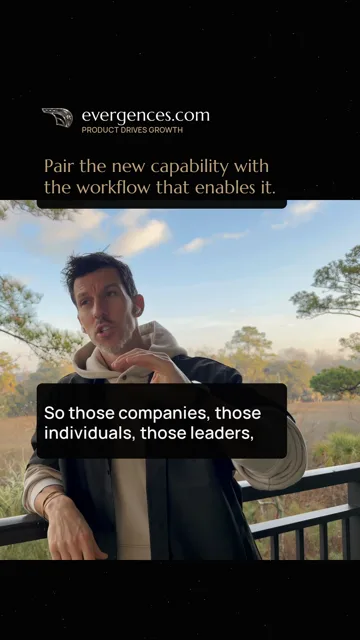
Pair a New Capability With Its Enabling Workflow
Sean connects a new customer capability with the workflow improvement that makes it possible. The investment and evaluation framework above goes beyond this short perspective.
Exact transcript
So those companies, those individuals, those leaders, who balance both. simultaneously, I'm thinking, what's a new capability, and also what's a workflow improvement that can enable that new capability? And these things start to work together.
Video and transcript pageWHAT YOU RECEIVE
Three useful outputs.
Enterprise and build plan
Operating model, workflows, data access and success criteria. A phased plan and agreed build scope.
Implemented AI capabilities
Agreed workflows, models, interfaces, data flows and integrations, with human review and operating ownership.
Validation and handover
Tests against agreed criteria, documented limits, handover and launch-readiness work appropriate to the agreed stage.
Two linked phases
- Assessment. Map the business, workflows, data access and decision ownership. Assess growth and defensibility priorities, then define the build scope.
- Build. Implement and validate the agreed solution, including scoped integrations, handover and launch-readiness work.
A prototype demonstrates an approach. A pilot tests it with a defined group. Production requires the agreed operational and launch checks.
What you bring
- An accountable sponsor and representative users.
- Current operating model, examples and baseline measures.
- Approved data and system access, permission constraints and agreed participation for assessment, validation and handover.
Share only information you are authorized to provide.
Clear boundaries
Excludes unagreed features or integrations, ongoing managed support, penetration testing, security certification and legal or regulatory advice. No business result is promised.
Scope before build. Agree the stage, access, responsibilities, acceptance criteria and operating plan before the relevant implementation work.
Start with three answers
- Which business capabilities and decisions should improve?
- Who owns it, and who will use the result?
- What approved evidence, access and measures are available?
RELATED EXPERIENCE
Evidence behind the approach
Employee AI planning and delivery
Sean led product and delivery work for an employee AI platform with a multidisciplinary team. The work included an internal agent marketplace and a business-intelligence agent with permissioned data access. The case does not report quantified business impact.
Read the case : Employee AI planning and deliveryOur own enterprise implementation
An ongoing own-business implementation connecting commercial research, product development, publishing, customer intake and operations. Published assets and verified workflows show progress; commercial improvement remains to be measured.
Read the case : Our own enterprise implementationDiscuss the decision first.
Review products and service engagements in the shop. Assessment and build are included in this engagement. Scope, fees and timing agreed in a proposal.